Experiments
Small worlds built to be used rather than scrolled. Each one borrows the look and the logic of a different corner of design history, and each has something you can actually do. They are separate from the work on the rest of this site on purpose.
- Start anywhere. There is no order and nothing to unlock.
- Everything stays here. No accounts and no uploads — exports, guestbooks and fieldbooks live in your browser, not on a server.
- Text underneath. Most worlds keep a plain, readable version below the machinery, so the words survive with scripting off.
- 01 · 1995–2002 homepages · about 10 min Old Web / GeoCities One kid’s homepage: his house, his family, his mates. The homepage of a kid named Damien, broadcasting from his bedroom in 1997 and kept exactly as he left it: his mum’s kitchen rules, the family war over the phone line, a fridge door held together by magnets, and his mates’ even worse pages. Hand-typed in Notepad, view-source is basically stealing, and the visitor counter counts nobody but you. Inside Eight pages from one house: a fridge door of family notes, a kitchen timer with strong opinions, and a nightly diary of the phone-line wars Working relics: a kitchen timer that beeps, a modem handshake you can play, and an 88×31 button maker for your own homepage A guestbook his mum checks, a loop of his mates’ pages, and four hidden spots — starting with a very small question mark Sign the guestbook.
-
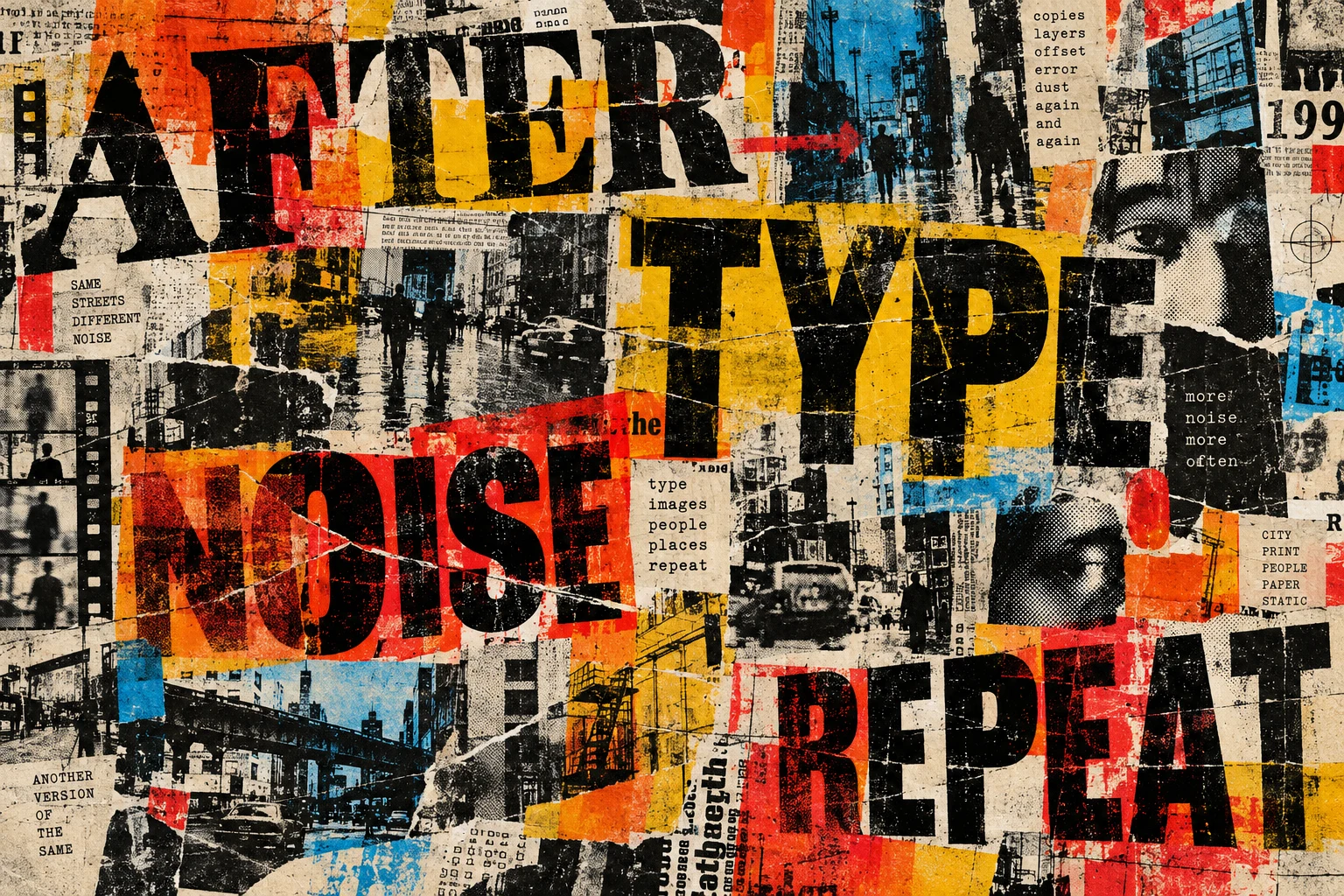 02 · 1980s–1990s print · about 4 min Grunge / Anti-Design Photocopied, stapled and argued over. A wall of cut-up colour borrowed from 1990s experimental print, with a working type lab underneath it. Read where the look came from, then set a phrase of your own and wreck it on purpose — the mess is aimed, and everything still reads. Inside Three short notes: David Carson and Ray Gun, Emigre, and the house rules for breaking alignment on purpose A lab where a phrase of up to 40 characters can be typeset cleanly, then broken Five sliders — scale, tilt, crop, grain, misregistration — plus a reshuffle seed and PNG / SVG export Set a phrase, then break the composition.
-
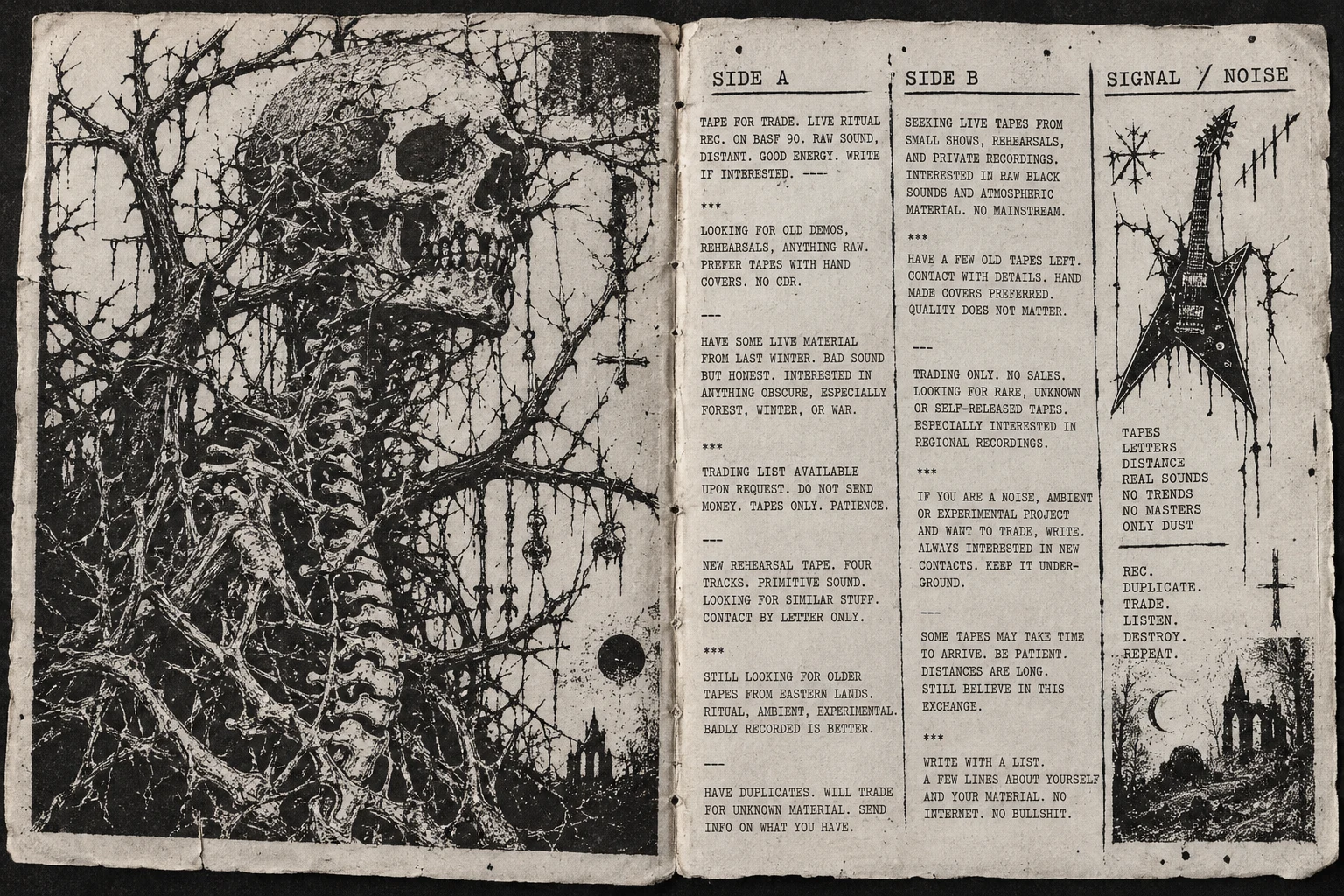 03 · 1980s–1990s tape-trading · about 6 min Gothic / Black Metal Zine A photocopied fanzine, read page by page. Basement Signal is an invented fanzine about tapes, four-track recording and photocopiers, printed in black and white the way its models were. Read it page by page — tape trading, bouncing tracks, clipping, paste-up, copy generations — then fold a mini-zine of your own from its clippings. Inside A full issue to turn through, spread by spread, with the staples showing — or the same words as plain text Hand-drawn figures for each topic, from a dubbed tape in an envelope to a signal clipped flat A maker at the end: choose six clippings, order them, print one sheet and fold an eight-panel mini-zine Turn the pages or assemble your own mini-zine.
- 04 · 1988 onward · about 5 min Rave / Industrial Techno A pirate-radio control panel. A pirate-radio control panel built around a step sequencer the page synthesizes itself. Lay down a pattern, set it running, and keep working the panel while it plays — this is the loudest room in the building, and it knows it. Inside A step sequencer you program yourself, step by step A control panel in the flyer language of rave and industrial techno, from 1988 onward Patterns you can change while they play, so the loop shifts under your hands Run a synthesized step sequencer.
-
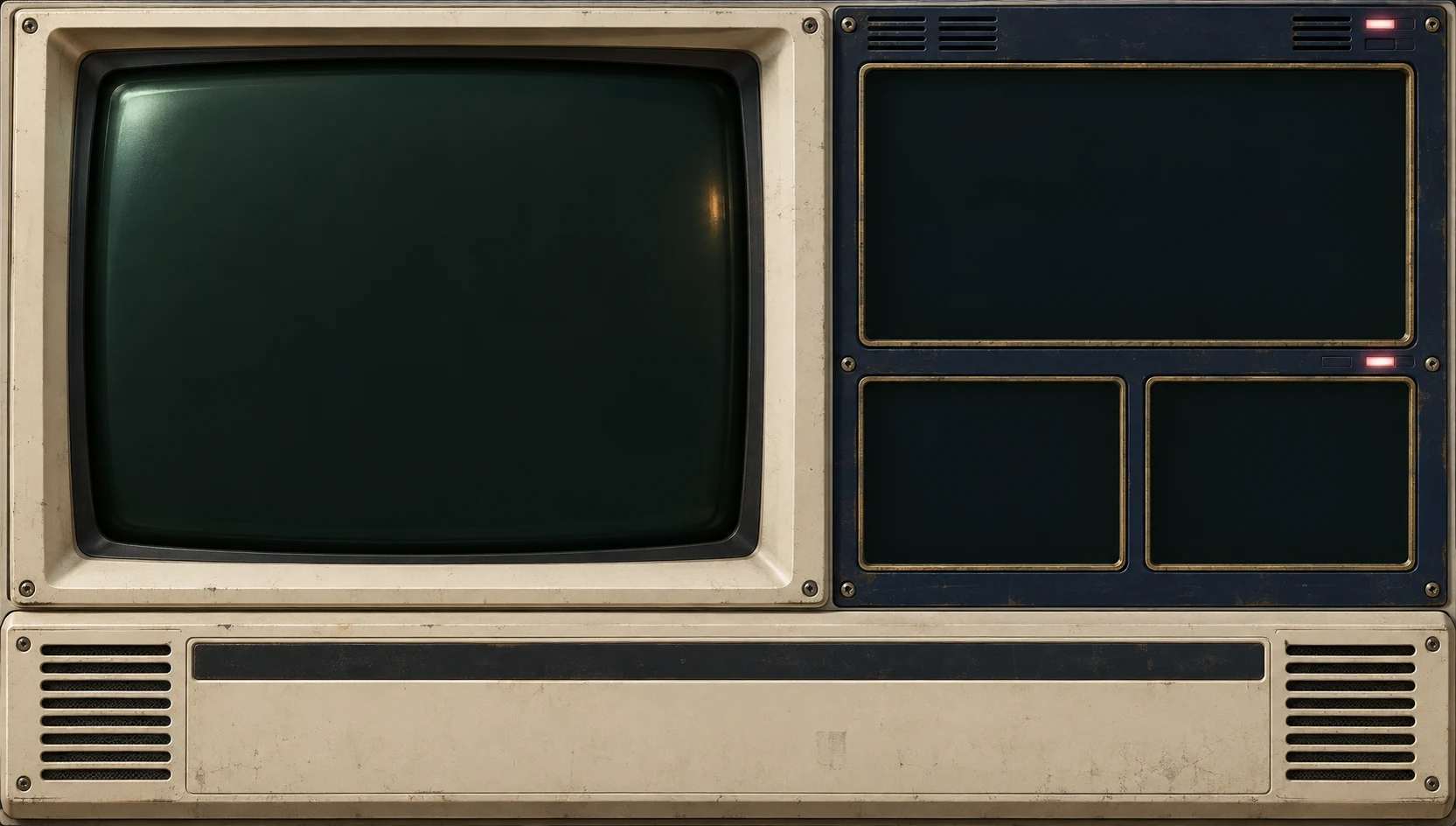 05 · 1960s–1980s hardware · about 8 min Cassette Futurism A tape deck for a future imagined before touchscreens. Its tapes hold notes, not music. The DS-C1 is a fictional cassette archive unit from a future imagined before touchscreens: chunky keys, a VU meter, lamps, and a rack of tapes that hold field notes instead of music. Load a tape, run the transport, and the instruments on the console follow the tape. Every switch changes something, and the machine works with the sound off. Inside Four tapes, two sides each, four notes per side — 32 short notes played by the deck and printed as transcripts A real transport: rewind, play, pause, fast-forward, a guarded eject, side and speed switches A scan console on top — terrain, orbit and signal views you can tune, driven by the tape position Insert a cassette, wind it, flip it, read what the tape says.
-
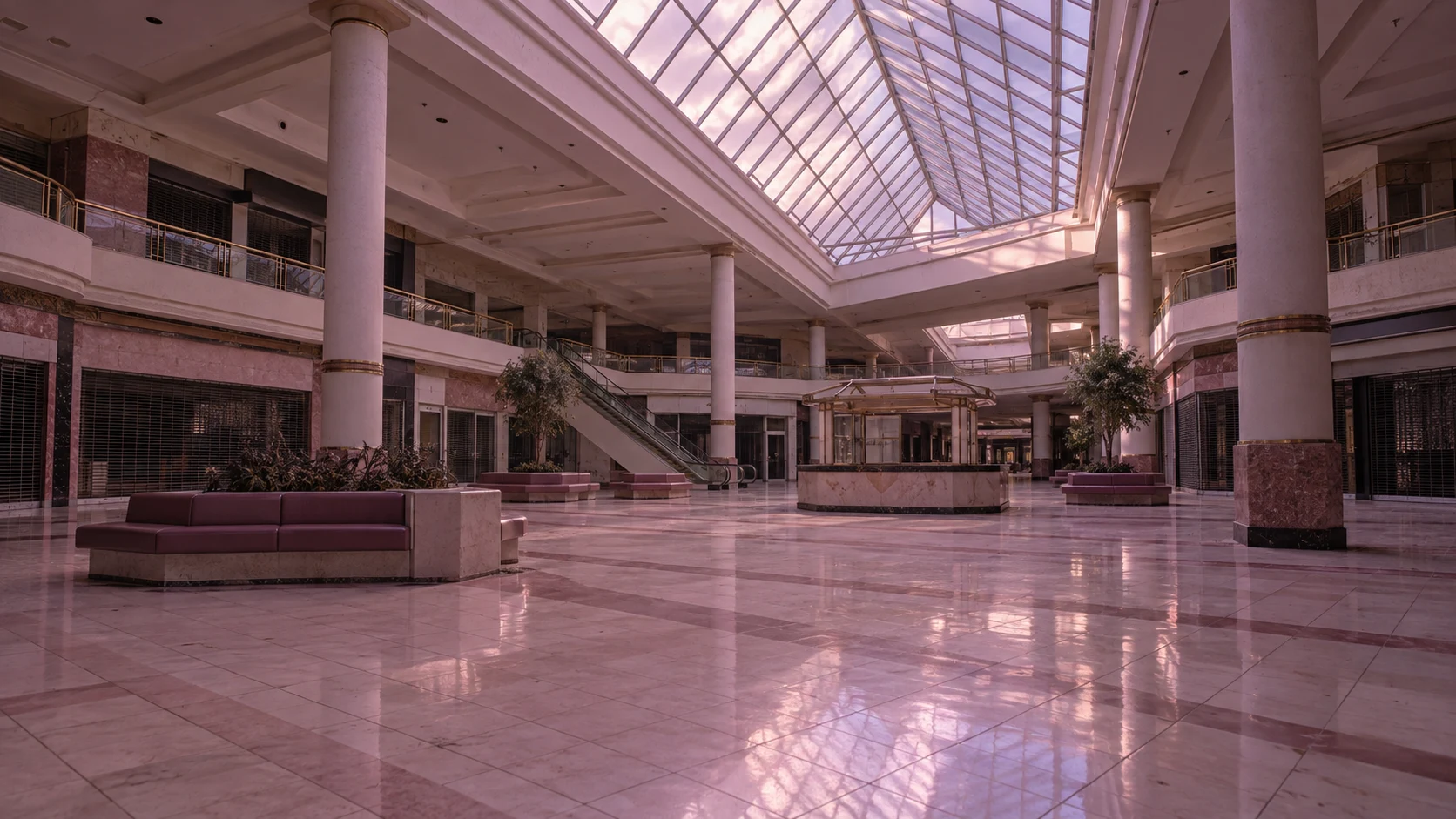 06 · 2010s internet · about 6 min Dreamcore / Liminal Spaces Empty rooms that are slightly wrong. Five empty rooms — an entrance, a corridor, a stairwell, a waiting room and a pool — that feel like somewhere you have been before. Nothing is timed and nothing is collected; you click a door and see what is next. A few things can be looked at, and looking changes which doors there are. There are two ways out. Inside A nonlinear walk through five photographic rooms, by mouse or by keyboard Objects to examine along the way; what you have seen decides which exits exist Two different endings — and a plain-text version that lays the whole walk out in reading order Walk a short, nonlinear route.
-
 07 · 2004–2013 consumer tech · about 10 min Frutiger Aero Glass, floating dolphins and an impossible ocean. Somewhere between a desktop and a daydream: glass, floating dolphins, liquid chrome and an impossible turquoise ocean. Set the personal atmosphere of the place — daylight, breeze, haze — then go below the wallpaper, where six fictional transmissions drift in and out of a receiver waiting to be tuned. Inside An atmosphere console with six presets and three sliders that relight the whole scene — sun, clouds, bubbles, grass and glint all answer to the same fictional weather An ocean receiver: work a dial or let it scan, watch the signal strength, and catch six transmissions A fieldbook that fills as you log what you catch — six field notes, saved in your browser, plus a field guide to the pod itself A spotter’s guide to the design language — six ingredients to look for — and a short timeline of the style’s glossy decade, 2004 to 2013 Tune a small, clearly fictional weather system.